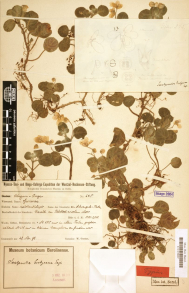
The Botanic Garden Berlin was founded in 1679. Although it did not belong to a major colonial power at that time, the Garden received considerable quantities of plants, seeds, and herbarium specimens from overseas territories through international botanical networks. These materials came from botanists working abroad, including in colonies governed by other European powers. Another significant source was the exchange of plant material with other botanists, herbaria, botanical gardens, and commercial nurseries.
Under the directorship of Carl Ludwig Willdenow (1801–1812), Berlin already played an influential role within these global scientific networks. This laid the groundwork for the Botanic Garden Berlin to become one of the largest institutions of its kind in Europe, even before the founding of the German Empire in 1871 and its subsequent acquisition of colonial territories.
At the Berlin Conference of 1884–85, European powers divided the African continent among themselves. Germany emerged from this process as the colonial power with the third-largest overseas holdings. Just four years later, in 1889, a Federal Council resolution awarded the Botanic Garden Berlin the first right to receive botanical collections from all expeditions financed by the empire. In 1891, the "Botanische Centralstelle für die deutschen Kolonien" (Botanic Central Office for German Colonies) was established at the Garden.
The "Centralstelle" focused on supporting colonial plantation economies by researching tropical plants, testing crops, sending seeds and living specimens to the colonies, training gardeners for colonial service, and advising officials, merchants, missionaries, and plantation owners. The Garden also used exhibitions to raise awareness in German society about colonial botany and the economic potential of plant products from the colonies. In this way, the Garden contributed to the implementation of plantation economies in the interest of the colonial rulers.
Between 1895 and 1910, the Botanic Garden was relocated to a more spacious site in Dahlem, due to the limited expansion possibilities at its original location in Schöneberg. The new garden was conceived as a place to display "the world in a garden". Competing with renowned institutions such as Kew Gardens and St. Petersburg, the Berlin Garden as intended to symbolize the imperial ambition and prestige of the German colonial power.
In addition to the "Centralstelle", the Heckmann Wentzel Foundation of the Prussian Academy of Sciences (now the Berlin-Brandenburg Academy of Sciences) organised numerous research expeditions. So within just 30 years, the Garden significantly expanded its living collections and herbarium holdings, including extensive material from the colonies. After the Treaty of Versailles sealed the end of Germany’s colonial empire in 1920, the "Centralstelle" was dissolved. However, this did not mark the end of German-run plantations or the botanical research and collecting activities of German scientists in former colonies.
Between 1939 and 1943, the "Centralstelle" was briefly revived. In 1937, the Botanic Garden was commissioned by German businesses to carry out applied scientific research on plantations in British-administered parts of Cameroon. The newly re-established "Botanische Zentralstelle für die Kolonien" resumed its work in 1939, funded by private sources. Due to wartime restrictions, however, its activities were soon curtailed.